Now that the cold airs have taken the bloom out of fussy perennials and the doomed annuals, the real champions of the garden step up. I speak of shrubs! But trees too fall into this category. I will be posting about the gifts these champions render during the stark, hard months with little growing life and lots of monotone.
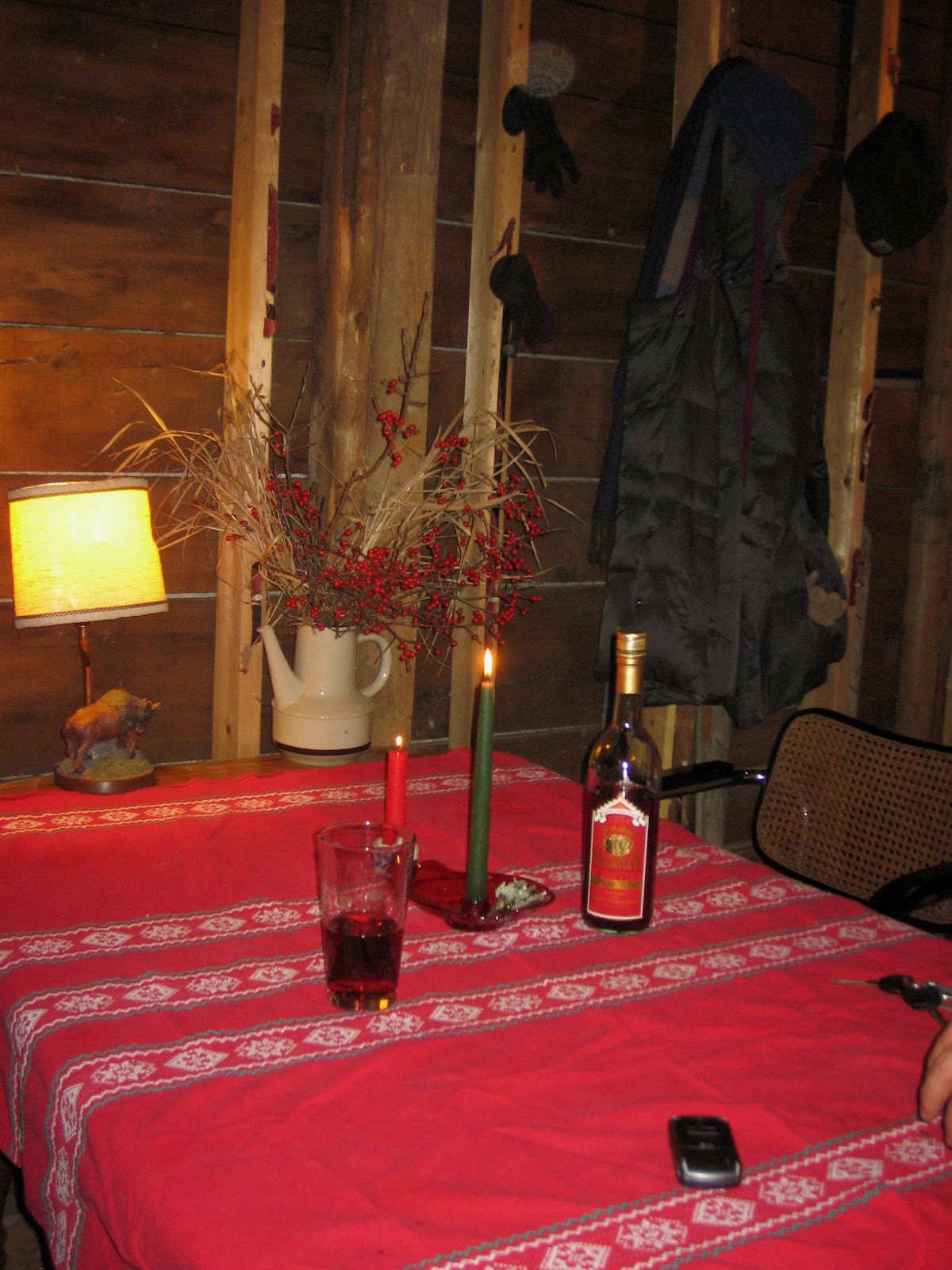
The generosity of shrubs had been lost on me until the day last winter I needed beauty for a festive event that was to take place in otherwise rugged and stark setting. Christmas in Maine: on a farm in a house heated only by a wood stove and walls laid bare to the beams. My son and I trekked through a meadow near the woods and, as we looked about for beauty, I heard a friend calling.
Winterberry (Ilex verticillata) was saying: “Hey you! I was made for this!” We tromped through the twigs and vines and made our way to the shrub with the bright red berries raised in hilarity against an otherwise unadorned landscape. Our table was filled with color and hopefulness because this generous joyful shrub that saves its biggest show for winter, when we need it.
Helpful Info about Ilex Verticillata:
Habitat: Native to native to the eastern and central United States; parts of Canada. Zone 3 to 4; often found at the edge of the woods.
Habit: A deciduous, multi-stemmed shrub generally 6’ to 10’ tall; oval to rounded form upright and spreading; tends to sucker and form clumps.
Foliage: Deciduous with alternate leaf arrangement; leaves are 1.5” to 3” long, elliptical with an acute base and acute/acuminate apex; green to dark green leaves vary from flat to shiny on the upper surface with an underside of leaf somewhat pubescent; serrate leaf margins.
Flowers: Dioecious, with male and female plants, male flowers in clusters; female flowers solitary or in 2’s or 3’s, small white flowers in early June.
Fruit: Only present on female plant, bright red and glossy, held well into winter close to the stem, singly or in pairs. Green during the growing season, changing in October.
Bark: Dark gray to brown smooth with some lenticels.
Use: Fruit display in fall and winter; useful in wet soils in mass planting along water; shrub border.
Liabilities: Fruit set only on pollinated female plants; need a male pollinator nearby.